

The popularity of smart homes has extended far beyond technology lovers; now is a common time when many people think about their smart home gadgets. IoT devices for home are not only cheaper than before but also quite simple to install and suitable to all forms of life. Whether you need to automate lighting, enhance the home safety, decrease the electricity consumption, control the appliances with just a phone, or even more, the IoT tech simply increases your comfort.
Today’s connected smart home is made up of devices that can easily share information via wi-fi, Bluetooth, Zigbee, Thread or other wireless protocols; rather than function on their own devices can coordinate among themselves on mobile apps or through virtual assistants allowing you set up an effective home environment.
This guide would elaborate on the mechanism behind IoT home devices, primary function of smart gadgets and the advantages, limitations, and points to note for buyers and even those groups of people the smart home tech best fits
Table of Contents
What Are Smart Home IoT Devices?
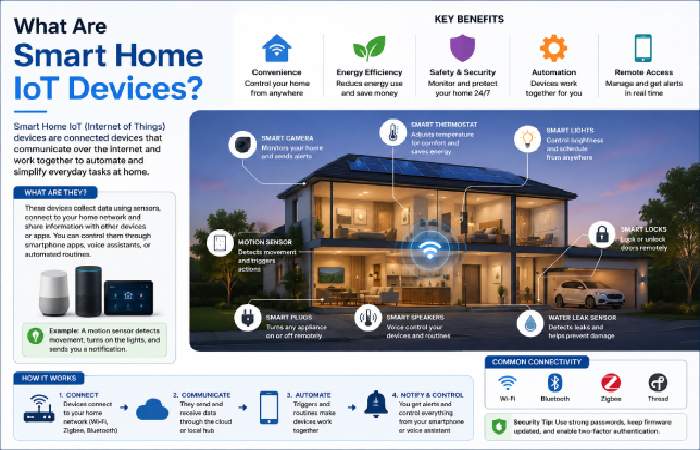
A smart home IoT device is basically any household gadget that incorporates sensors, processors and internet connectivity and is capable of sharing data with another device, carrying out its functions based on user or environmental directives. Some of the familiar smart home devices we see today include: – Smart speakers – Smart bulbs – Smart thermostats – Smart plugs – Smart locks – Video doorbells – Security camera – Motion sensors – Smart smoke detector – Robot vacuum cleaners – This all comes to signify that rather than purchasing and using each individual product in Isolation from other, you’ll always find yourself buying your .
Key Features of IoT Devices for Home
Modern IoT products commonly include:
- Remote control via mobile apps
- Voice assistant compatibility
- Scheduling and automation
- Energy monitoring
- Motion detection
- Real-time notifications
- Device grouping
- Remote diagnostics
- Firmware updates
- Multi-user access
A smart charger can also be a useful addition to a connected home, helping users manage the charging of compatible devices more conveniently.
Many devices also support automation routines, allowing multiple actions to occur with a single command.
Example:
Good Night Routine
- Lock doors
- Turn off lights
- Reduce thermostat temperature
- Activate security cameras
Common Types of IoT Devices for Home
| Device Category | Main Purpose | Typical Benefits |
|---|---|---|
| Smart Lighting | Lighting control | Energy savings, convenience |
| Smart Thermostat | Climate control | Lower heating and cooling costs |
| Smart Cameras | Home monitoring | Improved security |
| Smart Locks | Entry management | Keyless access |
| Smart Speakers | Voice control | Home automation hub |
| Smart Plugs | Appliance control | Schedule electrical devices |
| Smart Sensors | Detect movement or leaks | Prevent property damage |
| Robot Vacuums | Automated cleaning | Saves time |
Smart TVs are another popular connected device that can integrate entertainment with the broader smart home ecosystem, and you can learn more about their features in our guide to Smart TVs.
Technical Specifications Overview
| Feature | Typical Specification |
|---|---|
| Connectivity | Wi-Fi, Bluetooth, Zigbee, Thread |
| Power Source | Battery or mains powered |
| Mobile Apps | Android & iOS |
| Voice Support | Alexa, Google Assistant, Siri |
| Cloud Storage | Optional depending on device |
| Local Control | Available on selected products |
| Firmware Updates | Automatic or manual |
How IoT Devices Work Together
A typical smart home follows this workflow:
Smart Home Automation Workflow
- Install the device.
- Connect to Wi-Fi.
Pair to manufacturer app.
Add to smart home platform.
Set up automation rules.
Remote device monitoring and control.
Push notifications and software updates.
This workflow makes smart devices react automatically to schedules, presence and sensor activity.What are the Advantages of Smart devices?
Convenience- The smart home devices are more efficient in managing certain things in the household such as switching on and off the room lights or changing the temperature to one from a great distance or even on schedule. Home automation helps in performing the necessary actions remotely. Enhanced Home Safety- Connected devices can further take measures regarding home safety issues; for example smart cameras can help in keeping an eye over the property or the smart door can lock the doors as soon as you leave the house or someone suspicious approaches your house.
So even when you are miles away, your house is under surveillance.
Efficient Energy Management- The presence of smart home gadgets ensures that no resource is being wasted, hence reducing the electricity usage up to an extent. For instance, if not the lights in the room are switched on by just switching on the smart lights. Also the smart devices make your heating andcoolingsystem more responsive and smarter to avoid a higher bill at the end of the month. Home automation systems enable to cut down on unnecessary power consumption that you may not notice that it is taking place from your current traditional setup of electricity power consumption.
Remorte Access and Monitoring- Another advantage of home automation system comes from remotely monitoring the home activities with any part of the world with your mobile phones or laptops.
This would mean that you are watching your loved one at home or can see whether the doors are locked or what is going on at home, etc. Home automation has provided to be very useful for people working from outside. Automation allows owners to set their home in their preferred way to go with the daily schedules without having to manage or manage everything manually.
You may set up thelights,thermostat,andrefrigeratorto fulfill your requirements.
Performance Expectations
Although smart home technology continues to improve, users should maintain realistic expectations.
IoT devices generally perform well with:
- Stable internet connectivity
- Strong Wi-Fi coverage
- Regular software updates
- Compatible smart home ecosystems
Performance may vary due to:
- Internet outages
- Older home routers
- Device compatibility issues
- Cloud service interruptions
- Battery maintenance requirements
Smart devices improve convenience but should not completely replace traditional household safety measures.
Advantages and Limitations
| Advantages | Limitations |
|---|---|
| Easy remote control | Internet dependency |
| Energy savings | Privacy considerations |
| Increased security | Initial purchase costs |
| Automation | Compatibility differences |
| Voice operation | Occasional firmware issues |
| Real-time notifications | Network setup required |
Build Quality and Connectivity Considerations
Unlike smartphones, IoT devices vary significantly in build quality depending on their purpose.
Things to consider include:
- Indoor vs outdoor weather resistance
- Battery life
- Power consumption
- Wireless protocol support
- Build materials
- Waterproof ratings where applicable
Outdoor cameras and smart doorbells should include weather-resistant housing suitable for local climate conditions.
Who Should Buy IoT Devices for Home?
Smart home devices are suitable for:
- Homeowners
- Families
- Busy professionals
- Elderly users requiring monitoring
- Property managers
- Technology enthusiasts
- People looking to reduce energy bills
Who Might Want to Wait?
IoT devices may be less suitable for:
- Homes without reliable internet
- Users uncomfortable with mobile apps
- People concerned about cloud-based data storage
- Households with incompatible networking equipment
Are IoT Devices Legitimate and Safe?
Yes. Reputable manufacturers follow recognised communication standards and regularly release security updates.
However, safety depends on user practices.
Recommended security measures include:
- Strong passwords
- Two-factor authentication
- Regular firmware updates
- Separate Wi-Fi networks for smart devices when possible
- Purchasing from recognised manufacturers
Users should also review device privacy settings before enabling cloud services.
IoT Devices vs Traditional Home Electronics
| Feature | IoT Devices | Traditional Devices |
|---|---|---|
| Internet Connection | Yes | Usually No |
| Remote Control | Yes | No |
| Automation | Yes | Limited |
| Voice Commands | Yes | No |
| Mobile App Support | Yes | Rare |
| Real-time Notifications | Yes | No |
Popular Alternatives
Depending on your requirements, alternatives include:
- Conventional programmable timers
- Wired security systems
- Manual lighting controls
- Traditional thermostats
- Standard electrical switches
Although these lack automation features, they may require less maintenance and have fewer cybersecurity considerations.
Buying Tips for IoT Devices for Home
Before purchasing, consider:
- Compatibility with existing smart home platforms
- Supported wireless protocols
- Mobile app quality
- Security update history
- Warranty availability
- Local customer support
- Expandability
- Power requirements
Choosing products within the same ecosystem often simplifies installation and future upgrades.
Frequently Asked Questions
What is the use of IoT devices for home?
IoT devices for home are products connected to the internet that perform functions like lighting, security, heating and appliance remotely and automatically.
Do smart home devices need a Wi-Fi network?
While most devices use Wi-Fi, some will use Bluetooth, Zigbee, Thread or another wireless protocol which communicate through a compatible hub.
Are IoT devices secure?
IoT devices can be secured but will require the user to install firmware updates, to use strong passwords, two-factor authentication and to buy from a reliable manufacturer.
Can I integrate different smart home brands together?
Many newer smart home devices work with the Matter standard, allowing interworking between brands, but it really depends on the manufacturer and platform.
Can IoT devices save money off my electricity bill?
While some IoT devices such as smart lights and smart thermostats can save energy through automation and scheduling; your bill saving really depends on your usage.
Conclusion
IoT devices for the home are continuously changing day-to-day life. It ensures that houses are well connected, effective and adaptable. These IoT technologies vary in style and purpose from smart security cameras, intelligent thermostats to sensors and lighting technologies.
Smart homes now offers the practical solution, especially related to energy savings, house safety, and conveniences.
Though not every home will work with all such devices readily. Successfully setting up a smart home includes setting compatible products together. Good cybersecurity measures should be taken. Also be careful of the dependence of such home gadgets to the reliable home Wi-Fi.
Thus, carefully selected technologies are crucial and gradual set up of an IoT home is what will make the systems functional, enjoyable and lasting through years of convenience.