



An audit by the California State Auditor found that the State Bar of California ran a November 2024 pretest for the February 2025 bar exam that revealed freezes, crashes, and error messages, then moved ahead without ensuring the problems were fixed. When about 4,200 people sat the February 2025 exam, the audit states that failures were severe enough that scoring was adjusted, raising the pass rate from roughly 36 percent to roughly 65 percent. A related class-action complaint describes aspiring lawyer Laura Perjanik, a February 2025 California bar exam candidate, spending four hours unable to start her first essay because the software repeatedly crashed, leaving her in tears.
California State Auditor Grant Parks wrote that the State Bar “did not ensure that Meazure Learning addressed the causes of freezes, crashes, and error messages that test takers faced during a pretest in November 2024.” When a dress rehearsal surfaces specific failure modes and decision-makers ignore them, the breakdown is foreseeable.
Together, the audit and the lawsuit show that rehearsal failures do more than inconvenience candidates; they can threaten validity and the fairness of who passes. Meta-analytic research shows practice testing outperforms restudying alone, and College Board analyses of the digital SAT find that completing one or more full-length official practice tests is associated with higher scores than doing none, while also noting that these estimates are not causal. Together, those findings support the idea that exam-day readiness improves when people rehearse under the timing, format, and technological conditions of the real assessment with enough lead time to fix what goes wrong. That logic runs through how major exam programs structure software rollouts, how regulators update official practice tests, how specialist platforms deliver full-scale mocks, and how candidates can vet their rehearsal tools.
Table of Contents
Exam Makers Embed Their Own Dress Rehearsals
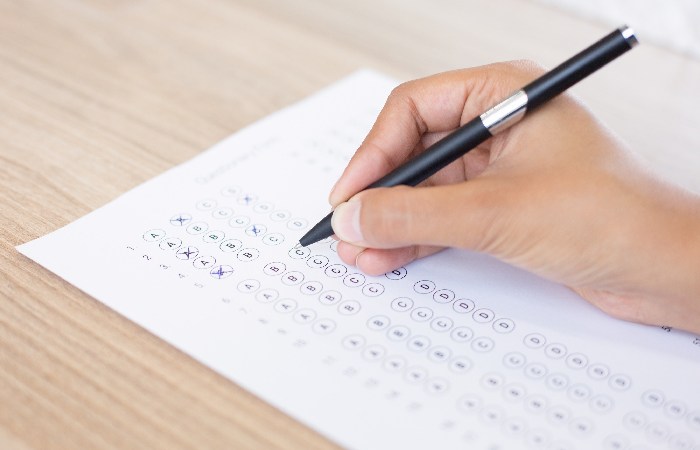
Major testing programs increasingly treat candidate rehearsal as part of their own infrastructure rather than something left entirely to third-party prep. When delivery systems change, they now tend to pair the shift with official practice environments so examinees can learn the interface and timing rules before stakes are high. That design choice turns preparation materials into an extension of exam operations.
The United States Medical Licensing Examination (USMLE) program illustrates this approach in its 2026 software transition for the Step exams. As it moved Step 3 to updated test-delivery software on March 10, 2026, with Step 2 CK and Step 1 following in May, USMLE rolled out tutorials and testing experience tools on its website that mirror the new interface, keyboard navigation, settings menu, image-contrast controls, and shorter 30‑minute block structure. The content, item counts, and total exam-day duration remain the same, but candidates can now rehearse under the exact block timing and navigation constraints they will encounter on exam day, reducing cognitive load when it matters most.
The National Conference of Bar Examiners (NCBE) applied a similar philosophy when it ran the January 8–10, 2026 beta test of the NextGen Uniform Bar Examination in Boston, Dallas, New York City, and Miami. More than 1,500 examinees completed the full trial under conditions designed to mimic a live administration, and NCBE reports that jurisdiction observers found workflows workable and that over 64,000 written responses were scored under structured double-grading procedures. When exam makers themselves rely on large-scale dress rehearsals to validate platforms, logistics, and scoring, it underscores the expectation that individual candidates will also need authentic practice on the systems they are about to trust with their results.
Regulators Mandate Blueprint-Aligned Practice
Licensing boards also formalize rehearsal fidelity in the practice materials they control. The National Council of Architectural Registration Boards (NCARB), for example, announced six updated Architect Registration Examination practice exams ahead of April 27, 2026 changes to case-study formatting and exam objectives. Those practice exams now reflect minor adjustments to 12 of the exam’s 91 objectives, revised case-study presentation, and a new edition of the ARE Guidelines, so candidates who work through them are rehearsing under the same blueprint that will govern their licensure attempt.
The Association of Social Work Boards (ASWB), which administers social work licensing exams, goes further by telling candidates exactly how to time their purchase of official practice tests. During its transition from the 2018 to the 2026 exam blueprints, ASWB offers two versions of its Online Practice Test, one aligned to exams given before August 3, 2026 and another aligned to exams on or after that date, and advises candidates to “wait until they have a testing appointment scheduled before buying the Online Practice Test to ensure their practice test reflects the exam.” That operational rule from the exam administrator itself makes the principle plain: practice is most useful when it matches the content and structure of the exam a candidate will actually sit.
Specialist Platforms Scale High-Fidelity Simulation
High-stakes assessments of any kind depend on more than theoretical knowledge; they hinge on people performing reliably under specific conditions. Aviation regulators capture this principle in formal training requirements. When the Boeing 737 MAX returned to service, FAA Notice N 8900.569 required air carriers to revise pilot training and qualification programs and specified that operators could not use a full flight simulator for 737 MAX training unless it had been appropriately modified, tested, and evaluated. Treating simulator readiness as a prerequisite for training, not an optional enhancement, parallels the way serious exam-preparation ecosystems treat the design of their mock exams.
For students in programs like the International Baccalaureate (IB) Diploma or IGCSE, the challenge is not only mastering syllabi but also handling tightly structured papers under time pressure. One online response is Revision Village, an IB and IGCSE revision platform used by hundreds of thousands of IB students worldwide. Its flagship feature for high-fidelity rehearsal is the twice-yearly IB Mathematics Prediction Exams: full mock papers authored by experienced IB examiners and teachers, released about a month before the May and November sessions and designed to mirror likely topic emphasis, question style, weighting, and difficulty. Students can sit these papers as timed exams, then use the platform’s markschemes and video solutions to see not just what they missed but how exam-style reasoning is laid out. A thoughtful Revision Village review therefore pays attention to how these prediction exams recreate timed exam conditions rather than just counting how many questions are available.
Performance-heavy licensing exams such as the NAC OSCE test communication, clinical reasoning, and the ability to perform under pressure as much as factual recall, so preparation cannot stop at reading textbooks. Programs that build timed, scenario-based simulations address this by letting candidates rehearse stations, refine explanations, and adapt under observation. The OSCE Academy, founded by healthcare professionals and educators to support international medical graduates preparing for the NAC OSCE, offers a four-month preparation course, in-person bootcamps, full mock exam simulations, and short courses for other licensing milestones, with activities designed to reflect Canadian clinical assessment demands and timed, high-stakes encounters.
Comparative studies of simulation-based medical education with deliberate practice versus traditional clinical education report overall advantages for the simulation-plus-deliberate-practice approach on measured educational outcomes. The mechanism is straightforward: repeated scenario rehearsal paired with structured feedback builds execution skills that declarative knowledge alone does not develop. That is precisely the skill set the NAC OSCE demands, where candidates must communicate, reason clinically, and prioritize in real time under timed station constraints—making timed, feedback-rich simulation a meaningful component of preparation, not merely supplementary review.
A Candidate’s Checklist for Authentic Simulation
For individual candidates, the practical question is how to tell apart genuine dress rehearsals from generic practice sets that feel busy but leave execution skills undertrained. A simple checklist organized around timing, interface, blueprint alignment, and feedback can keep preparation focused on simulations that actually resemble test day.Effective education and exam preparation go beyond simply reviewing information and should also help learners develop the skills needed to perform under real assessment conditions.
- Timing fidelity: Choose practice sessions that match your exam’s block lengths, number of sections, and break rules so you are rehearsing the real pacing rather than an easier or harder variant.
- Interface replication: Whenever possible, use official tutorials or platforms that mirror the navigation, tools, and constraints of your exam software so you are not learning the interface for the first time under time pressure.
- Blueprint alignment: Prioritize practice materials written to your current syllabus or blueprint, ideally by educators with examination experience, so topic weighting, question formats, and task types track what will actually be assessed.
- Consequence and feedback: Treat at least some practice runs as full-length, scored simulations, then review analytics, markschemes, or debriefs that highlight strengths, weaknesses, and recurring errors instead of stopping at a raw score.
Meticulous Dress Rehearsals for Exam-Day Readiness
Taken together, recent breakdowns in high-stakes exams, major software transitions paired with candidate tutorials, blueprint-linked practice policies, and simulation-heavy preparation ecosystems all point in the same direction. High-stakes exam readiness rests not only on what candidates know but on how well they have practiced performing that knowledge under the timing, format, and technological conditions the real assessment will impose.
Stories of candidates kept in limbo by failing exam platforms, sometimes in tears before they can even begin, show the human cost when dress rehearsals reveal problems yet systems fail to respond. Before the next high-stakes assessment, the most useful question for any candidate or institution may be simple: are you staging a genuine dress rehearsal or just studying more content and hoping it will be enough under pressure?